
How to communicate AI quality control without losing customer trust
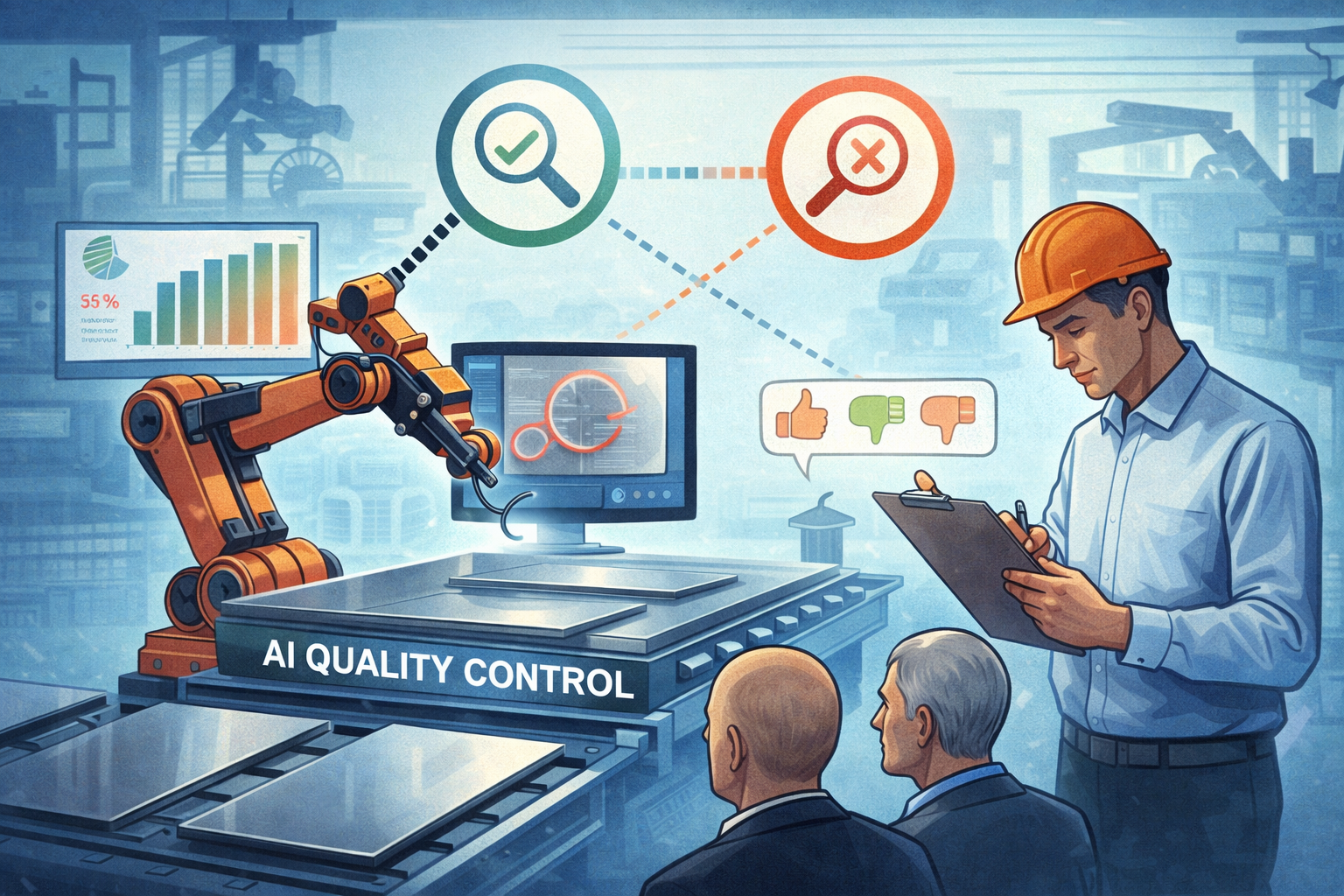
When artificial intelligence makes mistakes with absolute certainty, manufacturers face a communication challenge that extends beyond the technology itself. The industry calls this phenomenon ‘hallucination’, and in quality control, the consequences are tangible. An AI system might reject a perfect component or approve a faulty part for shipment, creating delays, waste, complaints, and regulatory scrutiny.
In practice, AI handles the repetitive, high-volume work, scanning thousands of components quickly and consistently. The challenge for manufacturers is not whether to use AI, but how to communicate about it in ways that build trust. When buyers hear AI is checking your parts, they wonder who’s responsible if something goes wrong?
Be clear about who does what and share results promptly
A steel manufacturer using AI for surface defect detection can identify potential issues far faster than manual inspection alone. But every flagged component is still reviewed by trained quality engineers before shipment. For buyers, that distinction is crucial. It reassures them that quality decisions haven’t been handed over entirely to algorithms, and that there is a clearly accountable person at the end of the line.
General claims about AI improving quality rarely convince anyone. Stakeholders respond to concrete evidence. Instead of saying the system is highly accurate, share what changed, for example, defect detection improved from 87% to 96%, inspection time dropped by 40%, and the rejection rate for good parts fell by half. Those specific improvements tell a story. They show the technology solved problems rather than just adding complexity.
Explain the safeguards
Communication becomes credible when companies detail their safety protocols. What happens when the system flags a component with low confidence? Does a human inspector review it? For critical parts, is there a second verification step? Do you regularly compare what the AI decided versus what manual inspection would have caught?
These aren’t minor technical details. They show that the organisation has considered failure modes and built controls to catch errors before they reach end users. Explaining these protocols signals maturity and accountability.
Where PR builds trust
This is where good PR makes a difference. Strategic PR helps manufacturers address scepticism while highlighting genuine improvements. Effective communication involves consistent messaging: case studies with real results, accessible explanations of how the technology works, and transparent discussions about oversight. It means preparing spokespeople to answer tough questions clearly. When asked what happens if the AI makes a mistake, the response should be specific and reassuring.
Manufacturers that communicate as carefully as they engineer, with honesty and evidence, build the trust that sets them apart in a market where AI adoption accelerates faster than confidence in it.
Please click here to find out more about BCM Global Manufacturing PR Agency