
Precision Isn’t What People Remember
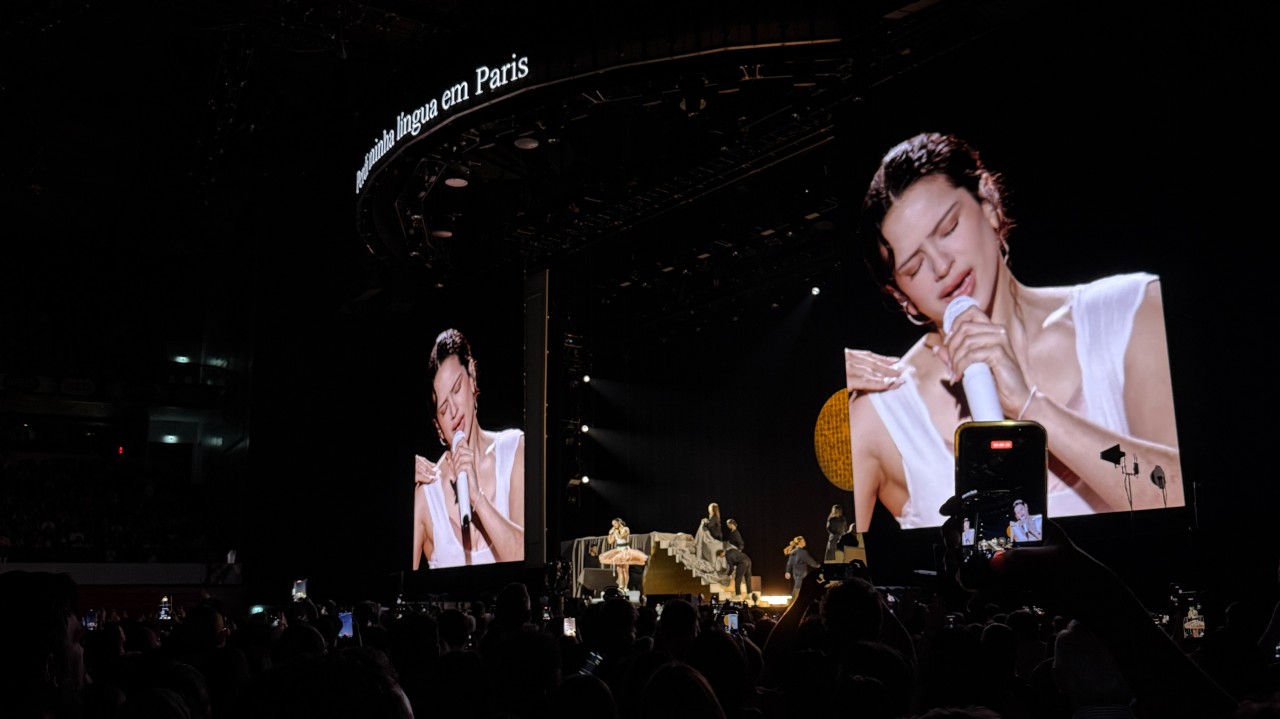
Yesterday I went to see Rosalía in Lisbon.
It was an incredibly precise performance; everything from the choreography to the visuals felt carefully considered, almost engineered in parts. But walking away from it, that’s not really what stayed with me.
It was specific, unplanned moments. A pause that felt slightly longer than expected. A shift in energy midway through a song. Certain visuals that were actually quite simple, but just… stuck in a way that’s difficult to explain.
None of these were necessarily the most technically impressive parts of the show. But they were the ones I keep returning to afterwards. The ones replayed, shared, and talked about.
It made me think about how we tend to approach communication.
Precision as a default
In a lot of the sectors we work in, precision is the starting point. Messages are reviewed, refined, and aligned until they are technically accurate and internally consistent.
That process is important. But it does have a side effect.
When everything is precise, structured and carefully validated, a lot of communication starts to feel interchangeable. Different organisations, similar language. And over time, it becomes harder to distinguish one message from another.
What actually stays
Memorability doesn’t seem to follow the same rules.
At the concert, the moments that stood out weren’t the ones that demonstrated the most control or complexity. One that stayed with me was unexpectedly simple. At one point, there was a brief pause while a wardrobe issue was being fixed. Rosalía spoke about her first show in Portugal, with slow music playing quietly in the background.
Nothing about it felt particularly polished. But it shifted the atmosphere completely. People paid attention in a different way.
More generally, the moments that mattered were the ones that created a slight shift, something that caught attention, or held it for just a bit longer than expected.
They felt intentional but not overworked. There’s something in that.
Memorability often comes from clarity, contrast, or simply a distinct point of view. Not necessarily from adding more detail, but sometimes from doing the opposite.
From leaving space.
The gap
There’s a gap here that feels quite familiar.
We spend a lot of time asking whether something is accurate, aligned, and approved. Less time asking whether it will actually stay with someone once they’ve read it.
And those two things don’t always happen together.
A message can be entirely correct and still disappear almost immediately. Not because it’s wrong, but because it doesn’t give the audience anything to hold onto.
The balance
This isn’t really an argument against precision.
If anything, it’s the opposite. Precision builds credibility. It signals expertise and trust, which are essential.
But on its own, it’s rarely enough.
What gives communication weight over time is memorability, the ability for something to be recognised, recalled, and repeated without losing its meaning.
Watching the performance made that contrast feel quite clear.
The most controlled elements created structure. But the most memorable ones created presence.
And perhaps that’s the balance we’re trying to find, not choosing between precision and memorability, but understanding that they don’t come from the same decisions.
Click here to find out more about BCM Global Communications Agency