
India Energy Week 2026
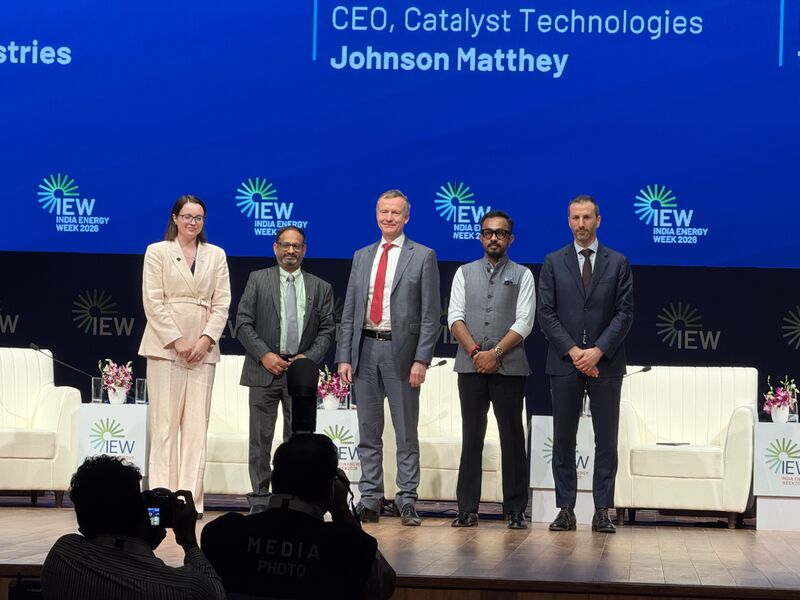
The past few days on the ground at India Energy Week have been busy, energising, and genuinely encouraging. Supporting Johnson Matthey at an event of this scale meant being at the centre of some of the most important conversations shaping the future of aviation, energy, and industrial decarbonisation—not just in India, but globally.
A particular highlight was seeing Johnson Matthey CEO, Maurits van Tol, actively contributing across multiple discussions. The focus areas were clear and timely: how to accelerate the adoption of Sustainable Aviation Fuel (SAF), what it will truly take for India to emerge as a global hub for energy innovation, and why investment and policy frameworks need to move faster if SAF is to scale in a meaningful, commercially viable way.
What struck me most, though, was not just the ambition in the room—but how much the conversation has matured.
From aspiration to execution
For years, discussions around SAF and low-carbon aviation have been dominated by high-level targets and long-term visions. Those ambitions still matter, but at India Energy Week the emphasis had clearly shifted. The tone was more pragmatic, more grounded, and far more focused on execution.
The questions being asked were no longer “Is SAF possible?” but “How do we scale it, and how quickly?”
Less theory, more substance. Less blue-sky thinking, more focus on technology readiness, feedstock availability, infrastructure, and cost curves.
This shift matters. Aviation is one of the hardest sectors to decarbonise, and SAF is widely recognised as the most viable near- to medium-term solution. But recognition alone doesn’t unlock progress. Scaling SAF requires coordinated action across technology providers, fuel producers, airlines, policymakers, and investors—and that coordination only happens when conversations become concrete.
The role of policy and capital
Another recurring theme was the critical role of policy certainty. SAF production is capital-intensive, and without clear, stable policy signals, investment will remain cautious. Several discussions reinforced the idea that governments don’t need to do everything—but they do need to create the right conditions for capital to flow.
That means long-term mandates, incentives that reduce risk in early deployment, and regulatory clarity that allows projects to move from pilot to commercial scale. Without these elements, even the most promising technologies struggle to move fast enough.
India’s opportunity here is significant. With its scale, growing aviation market, and increasing focus on energy innovation, the country has the potential not just to adopt SAF, but to become a global production and innovation hub. Realising that potential, however, will require alignment between policy ambition and delivery on the ground.
Technology readiness matters
One of the most encouraging aspects of the conversations was the realism around technology readiness. Rather than debating hypothetical pathways, discussions centred on what can be deployed now, what can be scaled in the near term, and where innovation is still required.
This is where companies like Johnson Matthey play a crucial role—bridging the gap between cutting-edge science and industrial-scale application. The focus on proven technologies, combined with continued investment in next-generation solutions, reflects a more mature and credible approach to decarbonisation.
Momentum is building
Overall, India Energy Week felt like a moment of momentum. Not because all the answers are in place—they aren’t—but because the dialogue has moved decisively from ambition to action. There was a shared recognition that time matters, that incremental progress is no longer enough, and that collaboration across the value chain is essential.
It was genuinely encouraging to see industry leaders, policymakers, and innovators aligned around the same fundamental challenge: how to move faster, together.
Supporting Johnson Matthey through these conversations has reinforced just how important this next phase is. The transition to sustainable aviation fuel won’t happen through talk alone—but events like this show that the groundwork for practical next steps is being laid.
And that, in a sector as complex as aviation, is real progress.
Click here to find out more about BCM Global Energy PR Agency